Hi, and welcome to the BANKEX Smart Asset creation demo.
This screen cast demo is intended to show the principles behind the tokenization of
assets for liquidity as presented in the BANKEX whitepaper.
Here we'll explain how BANKEX will tokenize an asset to create a Smart Asset on the Ethereum
blockchain.
To begin the demo, you first need to install the MetaMask plugin.
Then you will need to login to Ropsten Ethereum.
This test network will provide us the test Ethers to pay for the transactions in the
demo.
Look for the link in the video description below.
To create a Smart Asset, we first need to select the type of asset we want tokenize.
The Smart Asset Creation tool current enables the tokenization of cars, real estate objects
and Apple devices.
For the sake of simplicity this video will demonstrate how to create a Car Token so you
can get a better understanding of what a Smart Asset is and how it works.
BANKEX technology extremely innovative and scalable and was designed to create complex,
tailor made financial products.
If you can't find an asset type that you need, you can submit a request to the BANKEX
Foundation to crate it.
Once you have chosen your asset type, click on "CREATE ASSET"and you will see the
first step on the screen - contract initiation.
Once clicked, you will see the "Contract Initiation" page.
On this page, you will need to fill out the "Customer Information" and "General
Information" sections.
BANKEX will then verify the information that has been submitted.
All Smart Asset creation operations are stored on the blockchain.
We will be able to see the address of the smart contract we have created when we are
finished.
Users will also be able to view our open source code.
In this demo, however, we will not explore that option.
Now we will proceed to the initial input field of the contract.
Our first step will be to provide information about the person or entity that is creating
the Smart Asset, also known as the originator.
In the demo version, we will use simplified information about the originator.
We only need the originator's Ethereum wallet address from MetaMask.
We will collect more information needed for the creation of the Smart Asset as we move
forward in the demo.
Next you enter your email address.
At this point the user will choose a suitable KYC provider from a menu.
This might be an internal BANKEX KYC adapter or any external KYC product integrated with
BANKEX.
Here we will choose KYC provider 1.
A form will appear and we will need to complete it with all the basic information about our
asset.
For the car token, we will enter the following information:
The VIN number.
The car model – a Mazda, for example.
And other asset characteristics, for example, color, mileage and the year it as produced.
The BANKEX protocol might need additional information about the asset at a later time
and for this another smart contract with additional data on the same asset could be created, for
instance, for triggers related to asset performance or depreciation.
This might be a file which will be stored with BANKEX partner Microsoft Azure.
After providing the basic information, BANKEX stores it on Microsoft Azure and on the Ethereum
blockchain.
BANKEX doesn't store all information on the blockchain, only part of it.
This shared storage technology significantly reduces the cost of creating a smart-contract
and protects client confidentiality.
Then we proceed to the next step in asset tokenization, where we validate information
provided at the beginning.
This is important so we can be sure the asset is correctly valued.
The correct value of the asset is entirely dependant on the input of correct data.
When this is completed, we see that our "Car" token has been created and it has its own
ID.
This information will be available as a card, like on an e-commerce site.
BANKEX has a mobile app available on Google Play and the Apple store and anyone with the
app can use it to see that a Smart Asset token for a car has been created.
The token can also be seen on Etherscan.
For different Smart Asset types, different ERC-20 tokens will be created.
Using tokens, it will be possible to buy, sell, and own a fraction of the Smart Asset.
After creating the Smart Asset, we will need to crawl the information.
For this we will need to collect data from IoT sensors.
IoT sensors might be different for different types of assets.
In this demo version, we use a smartphone app that might emulate different IoT signals.
It can collect data such as latitude and longitude and photo data.
IoT sensors might also register data from an accelerometer, for example.
For different asset types, we can use a variety of data from different sensors.
It depends on the asset type, formulas, and smart contracts used.
Now we go the audit, validation and escrow steps.
The validation step is where internal checks and crawlers are used to confirm that the
data is correct according to external sources.
Second, external oracles will gather information on external data sources.
The third step involves escrow agents.
When we see, for example, that the asset has passed the internal BANKEX validation step
but hasn't passed the external oracle step, the asset will pass into escrow until the
matter can be resolved.
The extent to which an asset needs to be validated will affect its final price.
After providing all the needed information about the asset and the validation process
is complete, we will proceed to the tokenization step.
This will involve the creation of additional information.
There might be legal or commercial conditions, customs duties, or any other conditions listed
in the asset tokenization formula.
The BANKEX tokenization technology allows us to adapt Smart Assets to any location or
legal jurisdiction.
Now we are ready to calculate the Smart Asset price.
The value of an asset is also calculated on the blockchain and thus prevents any manipulation
or tampering with the information in the future.
We see here that the price of the asset, considering all the data that we have taken into account
as the result of the validation of the asset, comes to about 0.013 ETH.
At this point, we can put the asset up for sale.
The sale of Smart Assets takes place in the BANKEX Exchange.
Lets take a look now and see how this works.
We click the "PUT ON SALE" button for the Smart Asset to be released.
There will be an ISAO procedure - an Initial Smart Asset Offering procedure - which allows
the owner of the actual asset to attract capital from buyers of the Smart Asset - the Car Token.
So, our Smart Asset has been created, its existence has been recorded on the blockchain.
This is the card that shows us what it looks like.
At the moment, our Smart Asset only has a single owner, this is us, the originator of
the Smart Asset.
If we want, we can go to the "List of All Assets" here in the demo and we can see
that our Smart Asset appears on the list.
This is a simplified version of the BANKEX Exchange.
If we click on the Smart Asset, then we view its card and all the information about the
asset.
If we click on "All Assets" we get to the list of Smart Assets by types.
This list here in the demo, in fact, is the prototype of the BANKEX Smart Assets Exchange.
At the moment, the dynamic performance of Smart Assets on the exchange is not available.
In this demo version we see here that under the types of Smart Assets there can be lists
of subcategories of Smart Assets.
If we click on this Smart Asset, it is loaded with information from the blockchain so that
we can learn about the characteristics of the Smart Asset.
If we like what we see, we enter our location and click the "BUY ASSET" button.
Once clicked, we will need to confirm the operation, as all actions in the prototype
take place on blockchain.
Then we will get a message on the screen that let's us know that the Smart Asset has been
successfully purchased.
Now, to see what happens with the Smart Asset, you can open blockchain and see that 21 seconds
ago a Smart Asset token changed owners.
So, we open this operation and see that in the Smart Contract, in which we originally
tokenized the Car, the Smart Asset has been transferred from one owner to another.
If we click on this Smart Asset token, we can see that there is still just one owner,
but that he is different from the originator.
And so now this Smart Asset is owned by another person.
This process demonstrates the tokenization of real world assets, and clearly, transparently,
and fairly shows their value and who owns them and what transactions have taken place
with them.
Once again, this demonstration used a kind of Smart Asset that has been substantially
simplified for the same of the demo.
BANKEX tokenizes FINTECH products for complex asset types.
It is important to understand that for actual tokenization of our asset, that is for the
creation of a Smart Asset, we will need to purchase and use the BANKEX token and not
the test Ether.
The BANKEX token, with its official listing name BKX, will be available with the BANKEX
token sale.
In the future, BKX tokens used for the tokenization of assets will actually be classic utility
tokens that will be used by Smart Asset originators to pay for the creation of Smart Assets, to
purchase other Smart Assets, to pay BANKEX fees for transitions and general use within
the BANKEX platform.
And that's the demo for the creation of Smart Assets within the BANKEX Proof-of-Asset protocol.
Thanks for watching and stay tuned for more updates and demos.


 For more infomation >> Smart Cabrio & PASSION AIRCO 89833 KM !!! - Duration: 0:57.
  For more infomation >> Smart City-Coupé SMART & PASSION AIRCO/AUTOMAAT - Duration: 0:54.
  For more infomation >> Suzuki Swift 1.0 Boosterjet 112pk Smart Hybrid S&S Stijl RIJKLAAR - Duration: 0:57.
  For more infomation >> Smart City-Coupé smart & pulse automaat - Duration: 0:58.
  For more infomation >> Smart Forfour 52kW Joy Edition - Duration: 1:01.
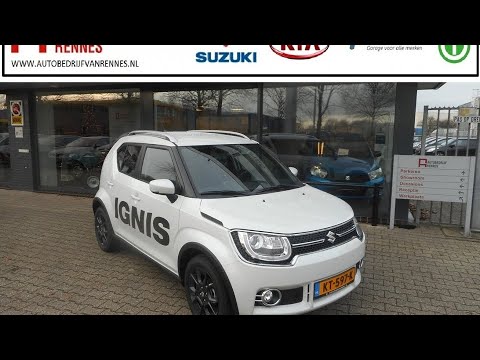 For more infomation >> Suzuki Ignis 1.2 STIJL INTRO SMART HYBRID - Duration: 0:54.

Không có nhận xét nào:
Đăng nhận xét