Thứ Ba, 27 tháng 3, 2018

Auto news on Youtube Mar 27 2018

When Jeep introduced the fifth-generation Cherokee in 2014, Jeep purists cringed.

The truck-like underpinnings that made the Cherokee a legend among 4X4 enthusiasts was

gone, replaced by the same compact car platform used in the now-discontinued Dodge Dart and

Chrysler 200.

Then there was the styling.

With a pinched front nose and odd, squinty headlights, the exterior design was polarizing

to say the least.

But then we drove it, and to make a long story short, the Cherokee's manners and capability

exceeded our expectations both on and off-road.

The Cherokee can range from utilitarian to legitimately upscale.

For 2019, Jeep seeks to play on the Cherokee's strengths while rounding out the rough edges,

tweaking the aesthetic, expanding the power train options, and bolstering its utility

to keep it relevant in the hotly-contested crossover segment.

But from a glance, the first thing you'll notice is the updated face.

It now sports more traditional-style headlights, and LEDs are now standard across the Cherokee

lineup from the headlights to the fog lights and tail lights.

A new back-end design also relocates the license plate to the tailgate rather than the bumper

to balance out the look.

Jeep builds the new Cherokee in five different trim configurations: Latitude, Latitude Plus,

Limited, Overland, and the off-road-focused Trailhawk.

We spent our seat time in the latter, both traversing the winding Malibu tarmac and tackling

the off-road trails found on the Calamigos Ranch facility.

A base model Cherokee will set you back $25,190, while the MSRP for the Cherokee Trailhawk

starts at $34,515.

INTERIOR AND TECH Depending on trim level and the equipment

selected, the Cherokee can range from utilitarian to legitimately upscale, with optional features

like a dual-pane sunroof, heat and ventilated seats, and FCA's proven Uconnect 8.4-inch

touchscreen infotainment system bringing a premium vibe to the compact crossover.

Some of the plastics will still remind occupants of the vehicle's mid-$20K starting price,

but on the whole, the interior fit and finish are above par for the segment.

Active safety tech like Lane Departure Warning, Lane Keep Assist and Park Assist help the

driver on-road, while features like Active Drive Lock and Jeep's sophisticated Selec-Terrain

traction control system help keep everything in order where the pavement ends.

While passenger space remains unchanged from the previous model, rear cargo capacity has

been increased by roughly three inches in width, now offering more than 27 cubic feet

in total.

DRIVING EXPERIENCE A new turbocharged and direct-injected 270

horsepower 2.0-liter four cylinder engine joins the roster of engines available in the

Cherokee, which includes a 3.2-liter, 271 horsepower V6 and a 2.4-liter four cylinder

with 180 horsepower.

Regardless of engine choice, you get a standard nine-speed automatic transmission.

The Cherokee's ability to dispatch challenging terrain is awe-inspiring at times.

Our Trailhawk was outfitted with the new boosted mill, which is short one pony of the naturally

aspirated V6, but bests it in peak torque by a healthy 56 pound feet, and delivers gutsier

mid-range pull in general.

Jeep explains that the nine-speed gearbox has been "tuned to match the performance

of all-new 2.0-liter," and while it behaves better than we've seen in the past, there

are still times when the transmission seems a step or two behind the power, either unwilling

to downshift in some situations or over-doing it in others.

It's a solid combination under the right circumstances though – acceleration is brisk

on-road, and the Trailhawk's four-wheel drive system gets along well with the motor

when barreling down the trails or crawling through deep ruts.

On the street, the Cherokee's manners remain agreeable – the cabin is relatively quiet,

the driving position is comfortable, and power delivery from the new 2.0-liter is ample,

while keeping the four-cylinder buzz to a minimum.

Corner carving has never been a focal point of Cherokee design, and that remains true

here – the quest for amenable ride quality and overall accessibility trump handling precision.

While Overland models were provided for our street drive rather than the Trailhawk-trimmed

Cherokees we used off-road, it's reasonable to expect that the driving experience with

the latter would be much the same, albeit with some increased road noise from the all-terrain

tires and a slightly harsher ride due to the beefed-up suspension.

Still, where the Cherokee proves to be a true standout in the crossover segment is when

it is outfitted in Trailhawk guise and unleashed on the trails.

Though it's still not on par with the capability of the Wrangler Rubicon, which offers significantly

more wheel articulation and is equipped with off-road-focused rubber, the Cherokee's

ability to dispatch challenging terrain is awe-inspiring at times.

Much of the credit has to be awarded to the Selec-Terrain system, which seems to know

exactly where to send the power at all times in order to get the Cherokee up and over obstacles

that sometimes appear well outside its scope of capability, let alone that of its rivals

in the crossover segment.Fuel economy for the Cherokee Trailhawk equipped with the 2.0-liter

engine is officially rated at 20 mpg city, 26 mpg on the highway, and 22 mpg in combined

use.

Expect significantly higher numbers if you don't opt for the Trailhawk's beefed-up

four-wheel drive system.

WARRANTY The Cherokee comes with a three-year, 36,000-mile

bumper-to-bumper warranty and a five-year, 60,000-mile powertrain warranty.

HOW DT WOULD CONFIGURE THIS CAR The Trailhawk is an agreeable cruiser on-road

as well, provided you're willing to compromise a bit on the handling and fuel economy.

While trim levels like the Limited and Overland offer posh luxury appointments, Jeep is the

wrong nameplate for that kind of ride.

We would instead turn to Jeep for its legendary off-road capability, and in this segment,

the Cherokee Trailhawk is simply unrivaled in its capability out on the trail.

Its advanced Selec-Terrain system and mechanically locking rear differential take this crossover

places that continually exceed our expectations – it's here where the Cherokee stands

out among other crossovers.

And despite the off-road focus, the Trailhawk is an agreeable cruiser on-road as well, provided

you're willing to compromise a bit on the handling and fuel economy.

CONCLUSION While the Cherokee remains a viable crossover

for school drop-offs and Target runs, it's the available off-road capability that allow

the Cherokee to truly separate itself from the pack.

The styling may be softer, but the Cherokee retains its off-road grit.

This year's design tweaks, new power plant, and reworked packaging are all welcome changes,

even if a few areas still show room for improvement.

Crucially, the availability of the robust Uconnect infotainment system and the Cherokee's

suite of active safety features means that buyers don't have to make sacrifices in

technological capability to get a rugged crossover, and now with the more traditional face of

the 2019 Cherokee, they won't have to compromise on the look anymore, either.

For more infomation >> 2019 Jeep Cherokee First Drive - Duration: 8:20.

-------------------------------------------

Jeep Wrangler Artec Industries Under Armor - Bellypan Kit (2012-2015 JK 2 Door) Review & Install - Duration: 5:41.

I'm Ryan from extremeterrain.com, and this is my review of the Artec Industries Under

Armor bellypan skid plate kit, fitting all 2007 and up JKs.

There is a different version of this kit available for those of you with the two-door and a four-door

JK.

And, there are two kits available, one for the 2007 to 2011 and another for the 2012

and up JK.

So, make sure you get the right one for your Jeep.

Today we're gonna talk about the construction, some of the features, and of course, how to

get this kit installed.

This is for those of you who want complete underbelly skid plate protection.

If you install this kit, you'll be able to take your Jeep off-road and not have to worry

about damaging any of the soft underbelly of your JK.

This kit is also made mostly of aluminum, so it's going to be able to keep the weight

down.

Now, a kit like this is going to be fairly expensive, especially when you compare it

some of the steel skid plates on the market.

Aluminum is, of course, more expensive because it is both lightweight and strong.

Combine that with the fact that this kit includes skid plates for the entire underbelly of your

Jeep, and that all of the skid plates are designed to work in conjunction with each

other without modification, and you have a kit that is both incredibly functional, but

also, a little bit pricey.

This skid plate system is going to protect everything on the underside of your JK that

you would wanna protect.

You'll have protection for the oil pan, the transfer case, transmission, the front of

the exhaust, and of course, the gas tank.

All of those are going to be protected with individual skid plates that are designed to

be modular, yet work together.

This means, you'll be able to remove individual skid plates for service without having to

take apart the entire system.

Each one of the skid plates is made from quarter-inch 661 aluminum, and the brackets are designed

from three-sixteenths-inch zinc-coated steel.

All of the aluminum and the bracketry is C&C laser-cut, and bent on custom-rolled dyes

to give you plenty of strength.

Everything in this system was designed using factory CAD files to give you a precise fit.

All of the nuts are pressed into place to make removing and reinstalling each one of

the skid plates a one-tool simple job, and all of the bolts on the underside are countersunk

to give you a completely smooth bottom.

The only place that you might have a bolt head sticking out is if you decide to use

your factory JK crossmember.

However, if you go with the Artec Industries crossmember, it will be completely smooth

from the front to the back, without a single bolt head to get hung up on.

With this system, you don't even have to drop the gas tank to get it installed.

Everything just bolts into place.

Speaking of installation, I would give this a strong two out of three wrenches.

You are going to have to do a good bit of drilling and install a few nutserts to get

this bolted up in your Jeep.

So, if that's not something you're comfortable with, you will wanna take this to a shop.

However, if you're installing a skid plate protection that is this beefy, chances are,

you wheel your Jeep a lot, you're used to breaking it, and you're used to fixing it,

so I know a lot of you guys are gonna wanna tackle this job in your driveway, and that's

certainly an option.

Artec Industries includes really clear instructions on exactly what needs to be cut, drilled,

and how to get this stuff installed.

The first step in the installation is going to be removing any of the factory skid plates

that you have in place, except for that gas tank skid plate.

From there, you'll just follow the instructions carefully, holding up each piece of skid plate,

marking where you need drill, installing nutserts where they need to be installed, and slowly

installing one piece at a time until you have this entire kit installed.

The installation will probably take you around four hours, give or take, depending on the

tools you have at your disposal, and if you're doing this on your back in your driveway,

or if you're doing it on a lift.

You will need a handful of tools to get this job done, from a drill and some sharp drill

bits, to a cut off wheel to remove the part of the factory gas tank skid plate to, of

course, your traditional hand tools for all the nut and bolt hardware.

There are certainly a lot of benefits to having an aluminum skid plate system.

You'll get lightweight combined with strength.

However, along with those benefits comes a higher price tag, and especially when you're

looking at this much quarter-inch 661 aluminum, you're certainly going to have a hefty price

tag.

When you combine that with the fact that this was designed using the CAD software from the

factory Jeep for a precise fit, all of this adds up to an expensive system.

However, if you're even looking at a skid plate system like this, chances are it's because

you do a lot of hardcore wheeling, and when you consider punching a rock up through the

oil pan and the damage that could cause to the engine, or cracking the housing of your

transfer case, or your transmission, all of a sudden, spending around $1,500 for a bellypan

system like this ends up being cheap insurance.

So, if you're looking for a complete skid plate system that gives you the benefits of

aluminum, being lightweight and strong, and is also a modular system that allows you to

easily access the underside of your Jeep for servicing, this is a great option to take

a look at.

It's certainly going to be a more expensive than a steel skid plate system, but for the

benefits of aluminum over steel, and for the way that this is going to fit under your Jeep,

I think it's certainly worth the cost.

So, that's my review of the Artec Industries Under Armor bellypan skid plate kit, fitting

all 2007 and up JKs, that you can f

For more infomation >> Jeep Wrangler Artec Industries Under Armor - Bellypan Kit (2012-2015 JK 2 Door) Review & Install - Duration: 5:41.

-------------------------------------------

Jeep Wrangler Barricade Double Tubular Front Bumper (1987-2006 YJ & TJ) Review & Install - Duration: 3:24.

The Barricade double tubular front bumper in gloss black is for those of you that have

a 1987 to 2006 either YJ or TJ, that are looking for a tubular front bumper to give you a little

bit more of that classic look.

There are gonna be a couple different tubular bumpers out there.

A lot of them are going to be the same three-inch round tubes, but some of them have a little

bit of a different detail on the end here, how they wrap around, if they're just straight,

how they're capped off.

So that's how these are gonna be a little bit different.

Overall, I like this one.

It is metal ends on the end here that are welded right on there.

They're not plastic caps that are on there.

So I think that this one's pretty well constructed.

And overall, it's going to be a very easy installation as well.

It's gonna bolt right onto that TJ or YJ, in place of that factory bumper.

Definitely a one-out-of-three wrench installation, in less than an hour.

And we'll talk a little bit more about that in just a second.

So, as far as features go, tubular bumpers are more of an aesthetic bumper, for the most

part.

There are some that you can get that will have a winch mount.

Some will have recovery points but for the most part, they're just aesthetic and that's

what this one is.

It does have two light mount tabs up on the top here for running a set of factory or aftermarket

auxiliary lights.

But it's not going to have any recovery points, any winch points, any points to jack up the

Jeep using a Hi-Lift jack.

Nothing like that.

This is going to be pretty simple, pretty straight-forward, and just give you a little

bit of that old school look.

As far as tubular bumpers go, I think this one is very fairly priced.

Again, I mentioned that it has the welded metal caps on the end instead of plastic caps.

So I think that there is a lot of attention to detail here.

The gloss black powder coat finish is really nice.

So I do think it's gonna be worth the price.

As for construction, like I said, this is very simple.

This is gonna be three-inch tube covered in that gloss black powder coat finish.

It has a couple of tabs welded on it.

Those are going to be your mounting holes.

Again, it'll bolt directly onto either a TJ or a YJ.

These corners here just sweep back a little bit, giving it some style.

You have those welded caps and you have a couple of light mount tabs on top.

Very simple bumper that's gonna give you that tubular, old school look.

As for the installation, one out of three wrenches.

One hour to get this installed.

All that you'll have to do is remove the factory hardware holding that factory bumper into

place.

Of course, if you have any lights mounted on that bumper, you'll want to disconnect

those as well, unbolt them, and be able to bolt them on to your new bumper.

But you can hold off until the new bumper's installed on the Jeep.

So, once that factory bumper's out of the way, go ahead and slide this over the frame

horns.

Bolt it down.

Then you can attach any lights that you have onto your new bumper with the light mount

tabs and you're gonna be finished with the install.

I mentioned before that, I think this is a pretty fairly priced bumper.

This comes in at $130.

And I think for the quality that you get, that is definitely going to be a fair price.

A lot of the plate steel, more off-road-ready bumpers are gonna be significantly more expensive.

They're gonna have more features and they're gonna be built stronger.

If you're not looking for that, if you don't need that, save your money.

You can go with something like this, if you like this tubular look.

It's gonna be far less expensive and it's still going to drastically change up the look

of your Jeep.

So, if you like the look of a tubular bumper on your Jeep, I think this is a very high-quality

option, available from Barricade.

And you can find it right here at extremeterrain.com.

For more infomation >> Jeep Wrangler Barricade Double Tubular Front Bumper (1987-2006 YJ & TJ) Review & Install - Duration: 3:24.

-------------------------------------------

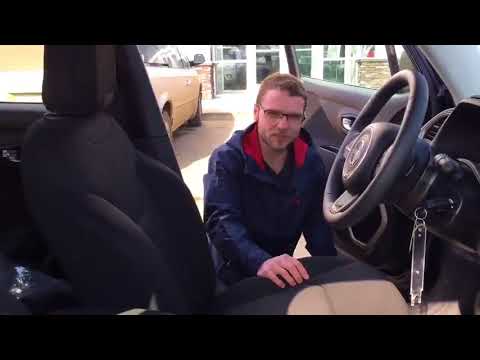
2016 Jeep Renegade | Redwater Dodge - Duration: 1:24.

What up everybody watching this video

I'm Ryan from Redwater Dodge

The most straightforward person you'll ever meet

Today I'm showing you a

2016

Badass box on wheels

So what would a box on wheels be with well

Without wheels,

So it does have brand new winter rubbers on there,

And I know you're probably looking is not that much

Winter left

That's because

Well, this isn't the reason there's no winter left,

But I mean I screwed up but that's okay

Summer tires in the back

They look a pretty fresh

95 percent

Either way we got summer tires

But I should mention this renegade isn't for the fain of heart

You need to know how to drive

And when I say that

It is a manual

And I mean manual doesn't really mean anything unless it has

Dual chrome tip exhaust

And hands down the most important part

4x4 this is not just a base model stick shift

With some cool Dual exhaust but

It's also practical

Alright so this

2016 Jeep Renegade with

12,000 kilometers interests you

Give me shout 780-942-3629

You can also email me Ryan

R.Y.A.N. not R.I.AN I'm sorry Rian Johnson

@redwaterdodge.com (Ryan@redwaterdodge.com)

For more infomation >> 2016 Jeep Renegade | Redwater Dodge - Duration: 1:24.

-------------------------------------------

Did Jeep make enough changes 🔴 To prevent water leaks on the 2018 Jeep wrangler JL Hard Top. - Duration: 14:40.

When Jeep redesigned the 2018 Jeep Wrangler did they make any changes for

water leaks. Stick around you might be surprised!

Welcome back my name is Brandon with Einother view and today we're gonna be

taking a look at what changes Jeep made for the water management system on the

new Wrangler, for those of you who haven't subscribed yet make sure you do

that down below don't forget to click that Bell icon for more Jeep content. So

today we're gonna go over four things, where we had leaks in the past, what

changes did they make on the JL versus the JK , Will the changes that they made

helped and if you ever have a water leak What to do. so let's jump right in there

are three major areas where we see water entering the vehicle app the first being

the a pillar area it could be left or right it'll actually drip down on the

vent or the door panel right there the door handles that second is the radio

area I've seen that leak anywhere from a couple of drips to absolutely soaking

the radio before and last but not least the place where we see at the most is in

the floorboard left or right front floorboard area gets soaking wet just

because you have a leak in one of those three areas doesn't mean that you only

have one problem in that area there are several things that can cause each area

to leak we'll go over that here in a few minutes so next let's compare the JL

water management system with the JK water management system and see what new

changes Jeep is made alright so first off let's take a look at the rain garden

here on the left side they haven't made any changes here on the front but if you

move down to the back of the front hardtop you'll see that they've taken

the water break out some of you might be like what's a water break but it's this

little piece right here in the back where if you are on an incline the water

coming down the channel will actually be slowed down by this little piece right

here all right let's see what changes they made to the front windshield header

shield as you can see right here is the windshield and this is the left front

section of the hardtop what you can notice right off the bat is the header

seal is much thicker on the jail versus the old JK's version they've also added

this little piece here to the top on the jl body and what that's for and you can

see here the JK's got a little bit to is we just talked about it it's water

braking and it's going to slow the water down if you're tilted on the Left

downward tilt it's gonna slow that water coming down and channel it

the windshield frame all right I hate to be the bearer of bad news but I got to

point this out the very front of the hardtop versus the edge of the door is

way too large and there's no water break on the drip rail so therefore when you

open the door and you're pointed downwards this water is gonna shoot

right into the door man I hate they done that I really think they'll probably

change this in the next year model I guarantee it here we are taking a look

at the left front door seal and as you can see here on the right side the JK

model has some deformities here on this seal and it's not very firm as you can

see here this definitely has the potential for a water leak so now let's

take a look at the jail and see what changes they made okay this thing looks

a lot better they definitely redesigned this to benefit for water leaks because

this is way more firmer and it just feels so much better now let's look at

the top of the door seal they made a few changes here also as you can see the

jail doesn't have those horizontal ribs in the door seal like the JK did now I'm

not really sure why they took those out maybe to have more ceiling surface area

I'm not really sure I thought it was a good idea whatever it was I'm sure

there's a good purpose behind it now if we move down towards the door jamb area

this is a very very crucial point here for water leaks now the reason this is

such a critical area is because right here is where it makes a transition from

sealing surfaces let me show you what I'm talking about now as you can see

here the clean spot on this door seal is where the door is making contact with

the seal and if we come down you can see that the seal is directly straight in

front of us okay but when we come up and start to turn the sealing surface area

moves to the outside of the seal unfortunately where the transition takes

place there's just not enough contact area there so it allows water to come by

and therefore is where some of our leaks come from so let's see what changes they

made on the jail body for this concern now you can see here the door seal looks

a little flat right here and I'm getting a little concerned because this area is

very very flat and looks like a huge

potential for water leak because there is no structure here at all it's not

firm or nothing you can see me pushing down on it

I really thought they would make some changes in this area since this is a

previous issue that we had and remember guys this is a brand new vehicle we've

never been on before so it's not like it's worn out or had time to wait now

let's take a look at the left side of the header seal where the hardtop sits

into the a pillar bucket yes I said muck it don't ask what it is that's just what

they call it now the JL version looks way better than

this JK version if you can look at the JK man it just looks like total I don't

know what up there and this is a brand new car to both these are brand new

vehicles guys I've got some major changes here in the water management

system coming up so make sure you keep watching now this is a very crucial area

for water leaks and let me point those out right quick right here where the

hardtop comes down into that market that market can get folded back okay and when

you lay the hardtop down it's folded inside that is a problem there's just

all kinds of problems going on with this JK here I'm really surprised as things

not leaking now let's look at the JL version now this thing looks so much

better it fits better it's smoother your transition point here it just looks way

better there's no bumps and humps in it this is definitely a benefit for the Jo

owners on the water leaks Jeep has done a good job on this now let's go ahead

and move back to the b-pillar markets now Jeep definitely made some changes to

the jl body on this but you're really gonna see the difference once we get the

hardtop off so let's go ahead and take the front hardtops off now if you'll

notice the JK has four latches to hold the left

hardtop bone and a screw down clamp here in that b-pillar roll bar

now the JL does not have that screw down clamp they took that away

although the folding the wind showdown is not new to the Wrangler Jeep sure did

make it a heck of a lot easier to get it down now here are two of the six bolts

that you'd need to remove to fold the windshield name

but when we do for the windshield down is that creating any potential water

leaks you might be surprised so make sure you keep watching all right the

first thing I noticed when I get this top off is it is way lighter man this

thing this thing barely weights anything compared to the old ones all right so

now let's take a look and see what changes they made to the actual hardtop

itself what you're looking at here is the left rear corner which is going to

be on that B pillar area as you can see the JL doesn't have all these extra foam

pieces and stuff like that and that's due to the upgraded B pillar mucket they

did a better job on that now if you've ever seen water dripping on the radio

this is actually one of a couple reasons that would happen so what you're looking

at here is where the hard tops meet in the center this is actually that corner

where it seals there and as you can see the JK has padding there whether the JL

doesn't now that's due to the upgrade of weather stripping on the right side

hardtop we'll take a look at that in just a minute now if you've ever had

water inside the actual hardtop sloshing around it's because the hard tops made

of two pieces as you can see here and for any reason if that seal has ever

broken whether you drop the top or you're in the accident water then is

allowed to get inside the hardtop and sloshed around at that point the hardtop

section that had the water in it would need to be replaced now as you can see

the JL is the same design so they have the potential for that also let's move

up top and take a look at some of the biggest changes Jeep is made in the

water management system what you're looking at here is the left front header

seal now we took a look at this earlier but that was with the top home let's see

what this looks like with the top off right off the bat you can tell a

complete difference in this header seal the JL has a lot more structure and

firmness to this seal than the JK does let's take a look at the JK and see

where its weaknesses were as you can see by the dirt and debris there's been a

lot of water running through this channel already now the way water gets

into that channel is the hardtop actually sits here along the edge and

water can get past that seal that first seal and run along in this channel now

when it runs along that channel it falls down into the driver's door seal now

there's a special channel for that water to be able to come down the

door okay now if all these things aren't right then you end up with a water leak

now water leak in this area will always show up in the floorboard now if you

have water dripping down the a-pillar onto the dash panel where the door

handles that then that is coming from a different area that's actually coming in

between the window frame and the header seal okay water is getting in between

there and when water gets in between there it comes through the body and

comes out of this seal right here on the backside of that seal and runs down the

a-pillar trim which now gets all over the door handle and the AC outlet now

let's take a closer look at the jl header seal as you can see already here

to the left there's a huge block there to where on the JK the water was able to

flow down into that left door channel so why is that there let's take a closer

look so you can tell already the thing looks way better and that channel

doesn't have water where it can come down so where does it go does it just

get stuck in there so I'm trying to figure this out you got a huge channel

in here and we come over and if you can see here it looks like they've designed

in somewhat of like a sunroof drain so this is huge guys look up in here see

right there that's the drain and it comes down the IE pillar and then I lose

it down here somewhere I can't I can't find it so what this is for is when you

fold down the windshield the water management system stays with the

windshield now what I'm curious to know is where does it come out at so let's

find out now I'm manually pouring water down this

channel just to see where it comes out at and as you can see here on the left

front fender it's coming out between the body gaps now this is pretty cool now

what we will have to worry about now is that drain getting clogged up with a

debris will there be small leaves or sticks or anything like that that might

get passed while the top is off and if you ever do put the windshield down when

it goes back up we'll need to make sure that that drain is

King now let's take a look at the right-side hardtop know it has a seal on

it that runs from the front to back that seals the left side hardtop now they

have made changes here and they look pretty good now this is where you see

that leak on top of the radio now I think this will help out a lot so now

let's make our way to the rear of the hardtop now let's take a look at this JK

this is a brand new Jeep as you can see the redesign of the JL will not have

this issue this is interesting let's take a closer look at this JK alright so

you can see I mean the seals pulled up right here the butyl tape is everywhere

the foam piece is not in this right place and look at this when I lift it up

the drain is completely crushed now if you have a leak in the b-pillar roll bar

area where the overhead light is at this could be one of your issues and guys

these are some of the problems that we have with the JK that they affixed with

the JL and I really gladly did now we're gonna move along the back of the front

hard tops and you can see the seal here almost looks the same JK versus JL but

that's not really what's important you're gonna get some water past there

what's important is what you do with that water once it gets past the JL has

a phenomenally better water management system then the JK does now here we're

looking at the b-pillar drain on the JL and it has the sunroof drain like the

front does and this is such a better way of doing it and if you look up

underneath the front door in the rear door

there's the drain for it so that's pretty cool awesome guys Jeep has made a

lot of changes on the jail and they definitely took water leaks into

consideration as you can tell from the video now are there some areas there

where we might see leaks I'm sure there are but I think that the JL will have

way less water leaks then the JK did now if you do get a water leak on the jail

make sure you check those drains there's actually four of them there's one in

each corner of the hardtops okay so I don't know if they're gonna make

something like a little snake type of thing or something like that but it's

really gonna just get debris in the top of it I really

don't think it'll get clogged up down through the actual tube just at the top

especially with the the tops off you never know when leaves or something like

that's going to get down in there just make sure you keep your drains clean and

also if you ever get a water leak on the driver's or passenger side floorboard

make sure you take a look at that door jamb area on the actual door seal that

looked like a really bad potential area for a water leak and that was gonna show

up in the floorboard guys I really appreciate you watching and like I

always said I want you to leave this video knowing more than you did when you

started the video so I hope that's the case

and if you like shopping Amazon make sure you click the link below down in

the description area to support this channel we really appreciate it

thank you very much and have a wonderful day

For more infomation >> Did Jeep make enough changes 🔴 To prevent water leaks on the 2018 Jeep wrangler JL Hard Top. - Duration: 14:40.

-------------------------------------------

Jeep Wrangler Rugged Ridge Heavy Duty 8,500 lb. Winch Review & Install - Duration: 5:54.

The Rugged Ridge 8,500 pound heavy-duty winch is for those of you that have a 1987 and up

Wrangler, that are looking for an inexpensive and fairly basic winch for your Jeep that's

still going to get the job done.

These days there are winches with a lot of different features.

This is going to be more of a no-frills option, but it's also going to save you some money

over those other ones, so if that's what you're looking for, I think you've found it right

here.

Rugged Ridge also has their new Gen II line of winches that are going to be a waterproof

solenoid box, again, a lot of other features even from Rugged Ridge you can find, but those

are gonna be more expensive.

So, again, a little more basic, and a little bit less expensive.

This is going to be a very easy installation for anybody to do.

If you have a winch-ready bumper or a winch plate on your Jeep you're gonna be able to

bolt this right down.

Definitely a one out of three wrench installation, probably around an hour or so to get this

wired up and bolted up, but we'll talk more about that installation in just a second.

So, if you're looking for a winch for doing self-recoveries, you are out there on the

trail.

You should never go out by yourself, but even if you have a buddy, and you just want a winch

to make it easier for you to recover by attaching it to a tree, or your buddy's vehicle, or

help pull your buddy out when he gets high-centered or buried up to the axles in mud, whatever

the case may be, there are a lot of different uses for a self-recovery winch like this.

And if you're looking for one, there are a couple different decisions to make.

One is going to be the pulling capacity.

This is an 8,500 pound winch.

Now, the pulling capacity of your winch should be, roughly, 1.5 times the loaded trail weight

of your Jeep.

So, if you're talking about a heavy, four-door JK that you get buried all the way up to the

frame in mud all the time, you're probably gonna wanna go with something a little bit

beefier.

But if you have a light TJ, then the 8,500 pounds is going to be more than enough for

you.

The other decision you'll have to make is what type of cable you want on it, what type

of rope.

This comes with a steel cable, and that's going to be your basic.

That's what winches have come with for a very, very long time.

These are fairly maintenance-free, they're just going to work time in and time out.

Some winches have gone up to a synthetic line.

That synthetic line is going to be a little bit more expensive upfront, requires more

maintenance, and requires being swapped out more often.

However, what the synthetic line is going to do for you is, while it still stretches

like the steel cable does on your load, it doesn't store that energy, and if it were

to break, it falls harmlessly to the ground.

This steel cable, if it snaps, it is going to move.

It can maybe cause some additional damage or, if you're standing in the wrong spot,

it can cause an injury, so you do have to be a little bit more careful with the steel,

but that's not to say that there's anything wrong with it.

Saves you some money, is more maintenance-free, and as long as you take the proper precautions,

it's just fine, people have been using steel for years.

So, if you're looking for an 8,500 pound winch that's gonna be more than enough for your

vehicle, you want this steel line for your maintenance-free factor and to keep costs

down, I think that this is gonna be a really nice, inexpensive option.

Winches are going to really be a couple of different pieces that are working together.

Here, you have the winch body, and then you have the solenoid pack.

The solenoid pack is what's going to take the power from the battery and, depending

on what setting you have here, either in or out on the remote, is going to power the proper

side of the motor here in the actual winch body.

This is going to be a series-wound solenoid box, you're going to have a planetary gear

set in the winch box itself.

As with most winches you're gonna have a clutch here so you can engage and disengage, so you

can freespool and just pull line out if you need to.

So it's gonna have all of those more basic features for your winch.

What this isn't going to have is spots to mount additional lights.

It's not going to be a waterproof solenoid box.

It's not going to have a wireless remote for it.

It's not going to have what some of those top-of-the-line winches have like a air compressor

built into it, or any of those other features.

Like I said at the beginning, this is gonna be a more basic winch that's just gonna get

the job done, and it's gonna be less expensive than a lot of the other options.

If you want more frills, you want more options, we have those as well, even from Rugged Ridge

we have those.

But if you want something simple and to save some money, I think you're looking at the

right winch.

As for the installation, like I said before, you are going to need a winch-ready bumper

or a winch plate on your bumper, but if you have that, this is a one out of three wrench,

one hour installation.

These winches, for the most part, have a body that is small enough to fit in or on almost

any winch-ready bumper or winch plate, and the bolt pattern here for the feet is going

to be pretty standard as well.

You're gonna be able to first mount your fairlead, it's just a little harder to get to the bolts

once the winch itself is mounted.

So, you've got your fairlead, you can then mount the solenoid box right on top of the

winch.

You'll have a couple of connections to between the solenoid box and the winch itself, and

you can get your winch bolted down.

And finally, run your two longer cables back to your battery.

You can run those through the grille, under the grille, along the fender, however you

need to to get it to the battery to connect it to the positive and the negative terminals.

After that, in order to use the winch, you really just plug your remote into the solenoid

box.

You're gonna have two buttons on the top, one for in, one for out, and you're ready

to winch.

So, I mentioned before, this is going to be a less-expensive winch than some of the others

out there that have a lot more features.

This comes in right around $300, and that really is par for the course for a winch of

this pulling capacity with a steel cable, not synthetic line, and none of those other

features that we talked about.

None of those other add-ons that we had mentioned.

So, if you want something pretty basic, I do think that this is going to be a quality

option, and I think that $300 is going to be a fair price.

So, if you're looking for a simple and inexpensive winch, I definitely recommend taking a look

at this one from Rugged Ridge, and you can find it right here, at extremeterrain.com.

For more infomation >> Jeep Wrangler Rugged Ridge Heavy Duty 8,500 lb. Winch Review & Install - Duration: 5:54.

-------------------------------------------

Jeep Wrangler Westin HDX Xtreme Boards (2007-2018 JK 4 Door) Review & Install - Duration: 3:54.

These Westin HDX Xtreme Boards in textured black are for those of you who have a four-door

2007 and up JK that are looking for a running board style sidestep.

This is not going to be armor.

This is going to be a sidestep.

This is going to install very easily onto your Jeep.

Definitely a bolt-on.

One out of three wrench installation.

Probably around an hour or so to get these installed, maybe a couple minutes more, and

we'll talk more about that installation in just a second.

Now, the reason that I stress the fact that this is a sidestep and not armor is because

these are very different things.

Armor is designed to hold up to protect the rocker area of the Jeep against rocks, stumps,

other off-road obstacles, and some of that armor can also offer a step.

This here is just going to be a step.

So, for as beefy as this looks, because of the way that it mounts and the way that it's

designed, it's not going to offer a lot of protection.

Definitely some door ding protection, protection against brush if you're running some light

fire trails, but not hardcore off-road protection.

So, that's definitely important to note.

But, if you're not looking for that type of protection, all you want is a good, usable

step that also offers a different look, then I think you're looking in the right place.

This is going to be a unique step.

We have bars that are drop steps.

We have your more traditional style running boards.

We have a tubular step.

This is something different that you don't often see.

This has a very angular, pretty aggressive look with your stepping pads recessed down

into it.

So, again, a very unique look that you're gonna get from Westin here.

Now, this sidestep's also going to be a little bit more expensive than some of those more

traditional ones.

There's a lot more that goes into manufacturing something like this with all of the angles,

and so it is gonna be a little bit pricier.

But as long as you're willing to pay a little bit more for something that has this look

and this function, I do think it's gonna be a pretty solid option.

These sidesteps are made of steel covered in that textured black powder coat finish.

They do come with all the brackets and everything that you need in order to get these bolted

up to the side of your JK.

This stepping pad here is going to be a plastic material that has a ton of grip built right

into it, so whether it's rainy, your shoes are muddy, there's some snow, you're getting

in and outta the Jeep, you're still gonna get a good bit of grip outta these.

And, these are going to be removable, so whether you're looking to clean things up, you need

to replace them, whatever the situation may be, you can remove those if you actually needed

to.

Now, there is a lot of HDX branding on these.

They're gonna have a badge on the end here.

A couple of badges on the actual stepping plate.

Usually, I like the branding of my products to be a little bit more subtle, but, as long

as you're okay with this, you know, it's not going to be a deal breaker.

So, to get these installed, again, definitely a one outta three wrench installation.

About an hour's time, maybe a little bit more by the time you get both sides finished up,

but the process is going to be very, very simple and bolt-on.

The first step is going to be bolting on the brackets onto the side of your JK.

After that, you'll bolt the sidestep onto the bracket.

Do that on one side, and rinse and repeat to finish it up on the other side.

Now, because these are going to occupy the same space as a lot of other sidesteps and

rocker armor, if you do have anything currently installed, you'll have to remove that first.

But, once you get that done, this is a very easy install.

These sidesteps are gonna run you right around $450 which, again, are more expensive than

your traditional round tubular sidesteps and some of the other options that we have, but

it's also a very unique look.

So, if you're willing to pay a premium for a unique look, have something that sets you

aside from a lot of the other Jeeps on the market, then I do think this is going to be

a very well-built option for you.

So, if you're looking for a unique sidestep for your four-door JK, I definitely recommend

these HDX Xtreme Boards from Westin, and you can find them right here at extremeterrain.com.

Không có nhận xét nào:

Đăng nhận xét