Thứ Tư, 4 tháng 4, 2018

Auto news on Youtube Apr 4 2018

Smart & Ready only happens once a month.

It's a time for men to come together and gain perspective, as well as coming up with an

improved game plan for their lives.

Take a look at just some of what we watched this last year.

The question I have for you today is, how will your life change today?

Did you just come along to have a great time or are we coming for a life-changing event?

And you know what, you get to decide.

You get to decide if today is a life-changing event or just another thing on your calendar.

The Akron is a tough nut to crack.

More than twice our guns, more than twice our numbers.

And they will sell their lives dearly.

They mean to take us as a prize.

And we are worth more undamaged..

And their greed will be their downfall.

England is under threat of invasion.

And though we be on the far side of the world, this ship is our home.

This ship is England.

Only the best of the best have ever summitted K2.

It's probably the greatest icon of mountaineering.

There's a million reasons why not to subject yourself to climbing an 8,000 k peak.

You gotta want to do it.

It's about what God is going to do in your heart and say in your heart to you today.

And can we actually listen to that?

Go!

If you do nothing else with your life, get to know the Shepherd.

I'm not kidding now.

If you do nothing else with your life, get to know the Shepherd.

How well do you know the Shepherd?!

Give your score between 1 and 10.

Give yourself a score between 1 and 10.

How well do you know the Shepherd?

Change that score.

Get to know the Shepherd.

If you do nothing else with your life, get to know the Shepherd.

For more infomation >> Smart & Ready summary - Duration: 2:28.

-------------------------------------------

💌 5 Smart DIY Tin Can Organizer Ideas That Don't Look Cheap 💌 - Duration: 5:03.

Do a little hunt around your house for random

empty tin cans because these teeny-tiny things here

still can serve purposes if you repurpose them right.

Here are 5 creative DIY tin can organizer ideas

that don't look cheap by simphome.com

you can try at home

if you are looking for fun things to do.

5. Gold Pencil Holder

Turn your tin cans into a pencil holder

and coat them in gold spray paint

so your friends won't suspect a thing.

Cut a spare board to size and sand it on

all sides and edges.

Glue the cans down on the board with liquid nails

and let it dry.

Paint your cups with several coats of gold spray paint.

You might have to do 3 coats

to completely cover wood grain on the board.

Fill your new organizer with scissors, pens,

highlights, and pencils!

One of the many DIY tin can organizer ideas

that don't look cheap that's totally worth trying.

4. Tin Can Lanterns

With only tin cans,

you can have some eye-catching lanterns.

Remove the label (if your cans happen to have any)

and pack the cans with sand,

top up with water and freeze them overnight.

Draw your design in a piece of paper

to fit the size of the cans and tape in place.

Put the cans on the sandbag and punch holes in them.

Put them in the fridge for 30 minutes

after each 10 minutes of work so they remain solid.

Punch a pair of holes opposite each other 3/8 in.

(1 cm) below the top of the cans for fitting the handle.

Remove the sand and make

a handle out of a 10 in (25 cm) length of a wire.

Fill the cans with newspaper

and spray paint them evenly

and attach the handle once they are dry.

3. Vases

With only empty cans and placemat,

you can have your own vase.

First, decide how tall and wide you want your vase to be

and use scissors to cut the placemat.

Create a cylinder with the piece you cut

and staple the ends together so they stay put in place.

Cover the seam where the ends meet

with washi tape or electrical tape.

Place the can inside of the cylinder and voila!

Super cute and easy to make!

2. DIY Beautiful Racks

This is really practical beautiful rack.

The trick is to remove both ends of the can,

and then arrange them however you like.

Then stack and glue the cans to each other.

Paint the cans beforehand

if you want to make the rack look cute.

Before we get to number 1,

I invite you to check subscribe button under this video.

If you never press it, click it, include bell icon beside it.

Your support means mood booster to us

and that means a lot.

Thank you for that...

1. Rock Covered Bucket

Instead of going to Home Depot

and spend money on planters,

you can make one on your own

with a strong (not flimsy) metal can.

Punch a few holes in the bottom

with a hammer and a thick nail first for drainage.

Apply a thick layer of thin set mortar

then cut the mesh tile with a box cutter and layer

the tile on the outside of the bucket.

Mix up some grout and add it with a putty knife,

then remove excess with a sponge.

There you have it!

A nice fully functioning planter ready to use.

It's remarkable what you can do with trash!

Get creative with these DIY tin can organizer ideas

that don't look cheap for a stunning addition

in your house.

If you learn new things from this video,

express your feeling using like or share button

under this video before you leave.

If you don't like it, share your mind

using comment area under those buttons

and tell us what you want.

Then dislike it if you feel have to.

See you again later sometimes in the near future

and thanks for watching.

For more infomation >> 💌 5 Smart DIY Tin Can Organizer Ideas That Don't Look Cheap 💌 - Duration: 5:03.

-------------------------------------------

Can You Bend Light Like This? - Duration: 9:33.

Thanks to curiosity stream for supporting PBS Digital Studios

Hey guys, Joe here. What do people used to do when they were born before we had all these devices to keep us occupied

Back to the old days people had to be more creative

Next time you feel like life's going too slow

Why not put those idle hands to use and play with the fastest thing in the universe

Here's three experiments that will show you how to bend light itself using nothing, but your own two hands

Try this close one eye look at something across the room

Preferably with a nice straight edge or an interesting pattern next put your finger a few inches in front of your eye

or a few centimeters

It's your choice now

Focus on that object and let your eye relaxed until both your finger and the background are slightly out of focus

when you move your finger side-to-side

look what happens the

Light seems to bend around your finger for some people it may bend toward your finger for some it may bend away

With a few tries you should be able to do this pretty easily

What's going on here is your finger tugging and the fabric of the universe

Well a little bit everything with mass warp space-time by some amount but your finger isn't nearly massive enough for it to be noticeable

Unless you have a black hole in your finger, which would really suck

Get it

We'll explain that but first let's try another one for the next experiment close one eye and look at something bright in the distance

Not the Sun

Never look at the Sun ever just don't do it

With one eye shut slowly bring your two fingers together just in front of your eye just before they touch

They seem to reach out and melt into one another

Try it with two objects out on a sunny day right before two shadows touch they seem to push out and join

That is cool. You're basically a wizard now bending light and bending dark

Finally for the third experiment blow is one eye again and slowly bring two fingers together near your eye

While watching the light through a slit in between them you should see a series of dark lines

Form as you move your hand back and forth the pattern of those dark lines can change

What's going on here?

How do these light bending experiments work well let science them and figure it out?

I'm gonna repeat the bending light with the camera is your eye

I'm pointing it at a grid on my computer screen a key to why this works is that we keep the background

slightly out of focus

So what's going on here? It has to do with what happens when light passes through a lens in your eye

Or in a camera take any point out here in front of the lens

Light reflects off that point spreads out passes through the lens and it's bent toward a different point behind the lens

The spot where the light comes together is called the focal point the lens in your eye

And the camera works in different ways to focus images your eye physically changes the shape of the lens while a camera

Moves it both alter the point where light from different distances comes together

When the lens is out of focus light rays from a fixed point don't come together

Exactly on the sensor or our retina the resulting blurred image is formed by separate light rays passing through different parts of the lens

If we insert something in between the object and the lens like a finger and block some of those rays

We've actually made part of the image disappear the center of the blurry area shifts to one side now a lens

inverts the image and our brain or

camera flips whatever falls on the sensor

So if we focus in front of the background the object appears to move away from our finger if we focus behind the background

It seems to bend toward our finger

This even works when we look at a thin object edge on at its most extreme

We can bend the grid so much that it breaks in

Reality light at any point spreads out at a three-dimensional cone, but this all works in the same way

Putting something between our eye and an object narrows that cone of light

We're not really bending light after all for blocking it block enough light and you create a shadow

Like in our second experiment when the shadows of your two fingers or other objects

Mysteriously bulged toward each other when they got close

This is called the shadow blister effect and to understand how it works you need to understand the parts of a shadow

The darkest part of a shadow where an object completely blocks the source of light is called the Umbra

This is the familiar dark part. We typically call the shadow, but around the edges

We're only part of the light is blocked by an object

We have the hazy ur penumbra for your typical shadow cast by a bright light source like the Sun

We don't see this hazy penumbra around the edge our eyes can't make out the tiny difference in contrast

But when two of these penumbra overlap when two shadows get close enough together

They can block enough light to become visible or invisible

And the shadows appear to bulge out, so what about those dark bands. We saw between our fingers

most of the explanations out there including several in textbooks say, this is a demonstration of diffraction the

Interference of light waves after they pass through something like a narrow slit, that would be really cool

But I'm not sure that's what's happening here and the experts I've asked about it agree for a few reasons

first for diffraction to work we usually need a

Coherent light source like a point of light or a laser that sends light waves out only in one direction. We don't have that here

Second since different wavelengths or colors of light diffract

Differently white light should give us some strange colored bands, not just dark ones

Finally to see diffraction through a single slit

it usually needs to be much narrower relative to visible light than the gap you can make with your fingers I

Think there's something else going on here

but I'm not sure what maybe something due to the shape and size of the eye or the

Iris or even an illusion caused by how our brains detect edges or different levels of light or?

Maybe it's diffraction after all even though

I'm almost certain that it's not I think I want you to try this and do some experiments of your own

let me know what you think is going on and why I especially want to hear from you if you're an optical physicist or a

neuroscientist or something like that

But everyone is welcome to do some science on this we can solve it you can learn a lot from a little boredom

many great scientists including

Einstein made time to be bored to let their minds wander one of Einstein's famous thought experiments

Led to his theory of general relativity

This predicted a different kind of light bending called gravitational lensing where massive

Objects warp space-time enough to actually bend light from a distant source

This idea may be inspired by boredom was observed in a 1919 solar eclipse and in later

observations like Einsteins cross

Bending of light from gravitational lensing has even offered experimental support for the existence of matter

We can't see dark matter often when we're bored our reflex is to find something to do with these things

But next time you find yourself

Unconsciously picking up one of these things remember that a couple idle hands can inspire awesome things

Stay curious

Ha so being bored can be a good way to inspire curiosity

Speaking of curiosity, thank you to curiosity stream for supporting PBS Digital Studios

Curiosity stream is a subscription streaming service that offers

documentaries and nonfiction titles from some of the world's best filmmakers including exclusive originals

I've been watching dream the future a 19 part series that asks leading visionaries to predict

What life will be like in 2050 it's exclusive of curiosity stream?

And it's narrated by Sigourney Weaver the first 10 episodes are streaming right now

You can get unlimited access today and for our audience the first 60 days are free if you sign up at curiosity stream

Comm slash smart and use the promo code smart during the signup process

You

For more infomation >> Can You Bend Light Like This? - Duration: 9:33.

-------------------------------------------

Why do people grind their teeth? | Smart Learning for All - Duration: 1:23.

Smart Learning for All

Why do people grind their teeth?

Because they are always hungry.

No.

Some people may grind their teeth unknowingly only during the night.

While others may grind their teeth during the daytime as well.

The medical term for teeth grinding is called bruxism.

What?

It also has a medical term.

Indeed.

Bruxism can be caused due to stress, anxiety, medications, etc.

However, according to a research, bruxism is also common in people who snore.

Snoring occurs when the muscles like uvula, tongue, etc. relax and fall at the back of our throat.

Blocking the air pathway and thus, causing difficulty in breathing.

Now, it is bruxism that reopens the air pathway.

Bruxism or grinding of teeth causes movement in the relaxed muscles.

Due to which the muscles return back to their original position, thus opening the air pathway.

For more educational videos, please download 'Smart Learning for All' Android App from Google Play Store.

Also, don't forget to subscribe to our YouTube channel.

For more infomation >> Why do people grind their teeth? | Smart Learning for All - Duration: 1:23.

-------------------------------------------

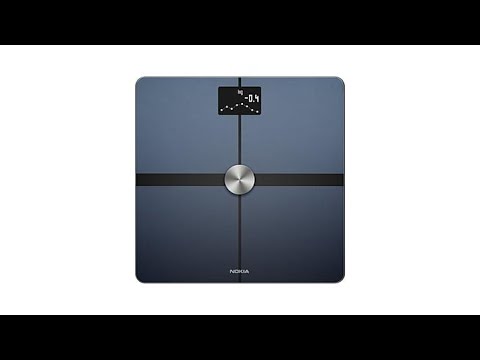
Nokia Body+ Smart Scale with Bluetooth and WiFi - Duration: 9:15.

For more infomation >> Nokia Body+ Smart Scale with Bluetooth and WiFi - Duration: 9:15.

-------------------------------------------

Dar forma al cambio inteligente con Hexagon Geospatial Smart M Apps - Duration: 1:46.

For more infomation >> Dar forma al cambio inteligente con Hexagon Geospatial Smart M Apps - Duration: 1:46.

-------------------------------------------

Livescribe Smart pen - Duration: 5:41.

- Hi, I'm Patty Bahr, I'm the director of ICATER,

which is the Iowa Center for Assistive Technology

Education and Research here at the College of Education

at the University of Iowa.

Welcome to another webinar.

Today we're going to talk about the Livescribe Echo Pen.

This is the pen, and this is the notebook that you use

to take notes.

When you open the notebook, you've got some special paper

in here, and the paper is going to let you record

or stop your recording, pause your recording,

or play back your recording.

So what your pen does, once you turn it on,

take the cap off, it's just like a regular pen,

and it's got this microphone right here,

so when you hold this and you start to take your notes,

oh you have to turn it on first.

So to turn it on, you actually hit this record button

right here.

So I'm going to hit it, and see if, I don't know if

you're going to be able to hear it,

but you get a little clunk, so listen carefully.

(ding noise)

Do you hear it?

Okay, so I can go up here and I can take my notes.

Maybe this is history class, and well we're talking about

the Civil War, and we're talking about United States,

but then they start talking about stuff that I'm not

quite sure about, but I can put stars,

I can put squares, it doesn't really matter what it is

that I'm putting on my page.

I can make graphs.

And whatever it is that the teacher is saying

is being recorded.

So I can stop my recording.

I'm just going to hit this little button right here

with my pen, and you'll hear that little clunk again.

(ding noise)

And now, I can play back what I just recorded.

So here's my playback over here.

And I'm just going to hit that one in the middle.

(ding noise)

And nothing happens, because I've got to tell it

where I want to start the recording,

because the recording is synced to what I wrote here.

So if I want to start at the beginning,

I'll hit the history, the word history,

I've got to hit it right on the line, so.

(playback recording plays)

Let's just say this is history class,

and well we're talking about the Civil War.

And I'm going to jump somewhere else.

(ding noise)

And I can put squares, it doesn't really matter what it is

that I'm putting on my page.

And then I'm going to stop.

(ding noise)

I can make graphs.

(ding noise)

Okay, so you might wonder can you go back, how much

this is, these are about $180.

You get a pen and a small pad of paper.

Replacement pens, these little cartridges are $5, $7 for

five of them, and then these bigger notebooks are $25

for four of them, so that's kind of your prices.

You can also upload this.

You can connect right to the computer, with a USB cord

to the computer, and it will upload a PDF of your picture

and the recording so that you've got it on the computer.

Another thing that you can do, I always kind of talk about

my husband, who used this technology to get through

statistics class at the University of Iowa when he was

getting his PhD.

He said this was the only way that he was able to

get through statistics.

And what he did was he took the paper out and he fed this

through his laser printer, so he actually printed

his professor's notes on this special paper ahead of time,

then he put this into a spiral notebook,

and then when he was in class, he had his professor's notes

and then he took notes over top of that.

So it ended up that he had professor's notes,

his own notes, and the recording all together.

So he could, they were all synced together, and if he,

for example, fell asleep in class, couldn't,

can't imagine doing that in a statistics class,

but if he fell asleep in class, he could go back and see

where the line was that he'd drawn when he fell asleep

and go back and fill in his notes because he could

listen to that again.

I think that's it for today, and thanks for listening.

For more infomation >> Livescribe Smart pen - Duration: 5:41.

-------------------------------------------

Suzuki Swift 1.2 Stijl Smart Hybrid Spoiler - Duration: 1:02.

For more infomation >> Suzuki Swift 1.2 Stijl Smart Hybrid Spoiler - Duration: 1:02.

-------------------------------------------

Be Smart, Be Safe ... with a FREE Safety Starter Kit valued at $330 - Duration: 0:16.

Stay safe with your new Husqvarna chainsaw this season with a free safety

starter kit on selected models. Only available for a limited time at

participating authorised Husqvarna servicing dealers. Husqvarna ready when

you are.

For more infomation >> Be Smart, Be Safe ... with a FREE Safety Starter Kit valued at $330 - Duration: 0:16.

-------------------------------------------

BREAKING NEWS !!! Smart Scale Ruler For Designers, Architects and Builders - Duration: 2:03.

architects designers and builders searching for a digital ruler that can

be easily customized maybe interested in the new smart scale ruler created by

interior designer Joanne Swissterski based in Toronto

Canada the digital ruler has been specifically designed to provide an easy

way to measure scales or units the smart scale ruler has been specifically

created to solve three main issues that waste time and cause frustration with

designers and architects these are not being able to read out of scale drawings

the struggle of understanding metric and having to deal with Imperial drawings or

vice versa and dividing areas into equal spaces when manually drafting the smart

scale ruler is the product of one interior designer strong belief that

paper is too primitive a thing to be creating obstacles for modern date

professionals technology has solved so many problems yet from time to time we

find ourselves standing in front of a set of drawings and not being able to

read them properly this should not be the case kickstarter crowdfunding

campaign early-bird backers can help the project with pledges starting from 99

pounds or CAD $179 if all goes well worldwide shipping is expected to take

place during August 2018

Không có nhận xét nào:

Đăng nhận xét